

(photo credit: Microsoft Stock Images)
Many organizations postpone system changes to avoid disruption. While this delay can feel practical, older platforms often create quiet expenses that grow over time. These costs rarely appear on a single line item, yet they affect productivity, decision speed, and long-term competitiveness.
Operational Drag and Lost Time
Legacy systems tend to require manual workarounds. Employees spend extra time reentering data, reconciling reports, or troubleshooting issues that newer tools handle automatically. Over weeks and months, these small inefficiencies add up. Teams may work longer hours just to maintain output, increasing fatigue and reducing focus on strategic priorities.
Outdated systems can also slow response times. When information is scattered across platforms, leaders wait longer for reports or approvals. Missed opportunities often follow, especially in fast-moving markets.
Data Gaps and Limited Insight
Older platforms may not integrate well with modern tools, which limits visibility across departments. Inconsistent data creates uncertainty during planning cycles. Decisions based on partial or delayed information increase risk, even when teams act in good faith.
Access to timely external insight matters as well. Businesses that rely on outdated feeds or manual research may fall behind competitors using real-time intelligence from market data providers. The gap shows up in pricing, forecasting, and customer response.
Security and Compliance Exposure
Aging systems often lack current security updates. This increases vulnerability to breaches, which carry financial and reputational consequences. Compliance requirements also change over time. Systems that cannot adapt easily may force organizations into reactive fixes rather than steady governance.
Audits become more stressful when records are incomplete or difficult to retrieve. The cost of remediation often exceeds the investment required for an upgrade.
Talent Retention and Scalability
Employees expect tools that support efficient work. Frustration with outdated systems can affect morale and retention, especially among skilled professionals. Growth also becomes harder when systems cannot scale with demand or support new services.
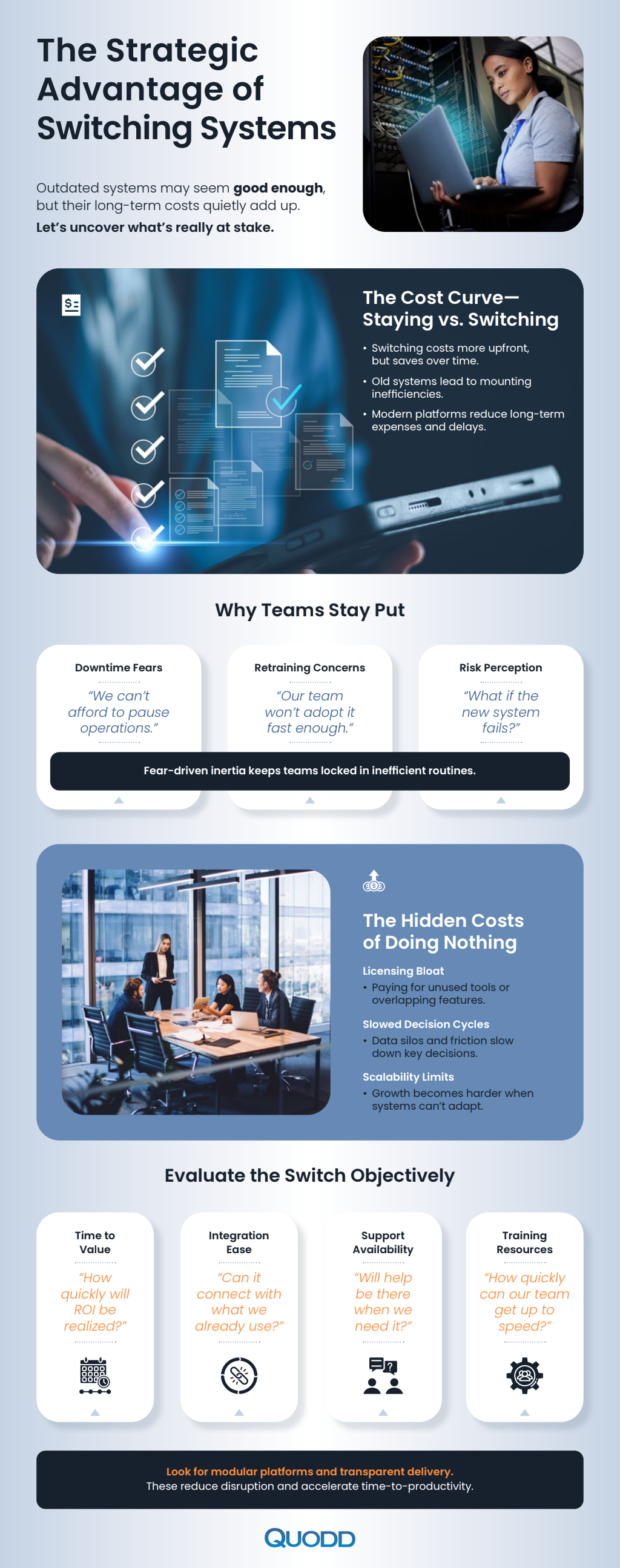
Delaying change may feel safe, but the hidden cost of standing still often exceeds the price of moving forward. Regular evaluation helps ensure systems support goals instead of quietly limiting them. Check out the infographic below for more information.
About the Author



Recent Comments