

(photo credit: Microsoft Stock Images)
Corporate event costs can change quickly based on the type of room selected. A small meeting room, ballroom, conference hall, or breakout space each carries different pricing factors. Understanding these differences helps planners create accurate budgets.
Small Meeting Rooms
Small meeting rooms are often used for board meetings, interviews, trainings, and planning sessions. These spaces usually cost less than larger rooms because they require fewer staff, less equipment, and limited setup time.
Common costs may include room rental, basic seating, Wi-Fi, refreshments, and presentation equipment. Planners should confirm whether screens, microphones, and video conferencing tools are included or billed separately.
Conference Rooms
Conference rooms are suited for workshops, leadership meetings, and department events. Costs often increase because these rooms may need flexible seating, stronger audiovisual support, and more food service.
Layouts can affect pricing. Classroom seating may require tables, while theater seating may allow more guests in the same space. More setup changes can increase labor fees.
Ballrooms and Large Event Spaces
Ballrooms are often used for award ceremonies, company dinners, product launches, and large presentations. These rooms usually carry higher costs due to size, staffing needs, lighting, staging, and catering requirements.
Large events may also require registration tables, coat check areas, security, signage, and technical production services. These items should be included in the budget early because they can significantly affect total cost.
Breakout Rooms
Breakout rooms support smaller group discussions during larger events. While each room may seem inexpensive, costs can add up when several are needed.
Each space may require seating, signs, screens, speakers, or refreshments. Planners should account for setup time between sessions, especially when rooms serve multiple purposes.
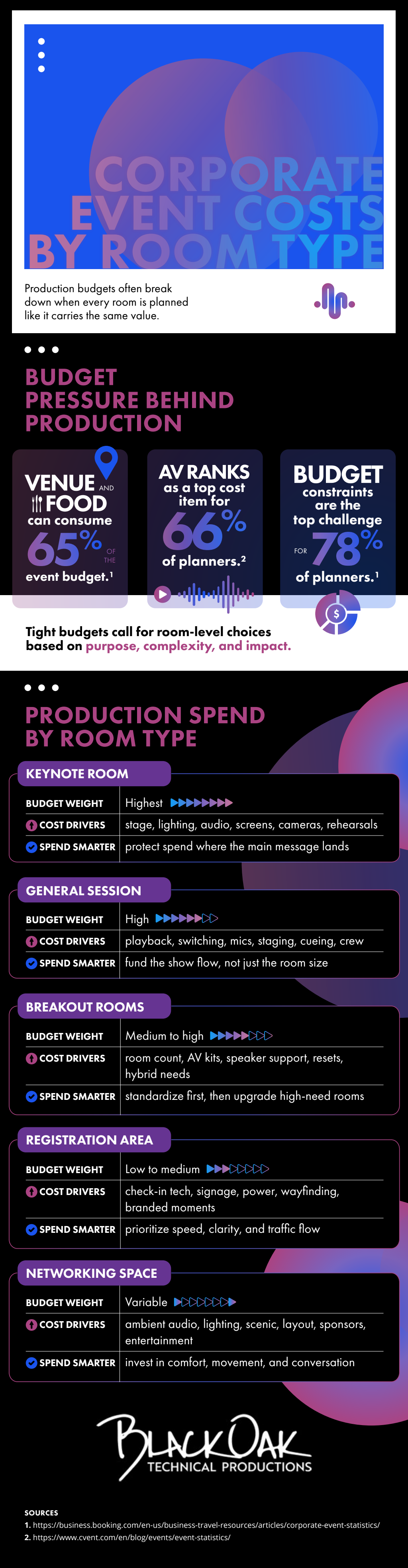
Corporate event budgeting works best when room type, equipment, staffing, catering, and setup needs are reviewed together. Careful planning helps companies control costs while creating a well-organized event. Look over the infographic below to learn more.
About the Author



Recent Comments